Booknotes
Item set
Items
-
 Reporting Vietnam. Volume 1 includes interviews and reportage by Neil Sheehan, David Halberstam, Russell Baker, Meg Greenfield, Martha Gellhorn, Ward Just, Tom Wolfe, Mary McCarthy, Seymour Hersh, Francine du Plessix and others.Volume 2 includes reportage by Seymour Hersh, Francine du Plessix Gray, John Saar, Gloria Emerson, Sydney Schanberg, Flora Lewis, Peter Arnett, and others.
 -
 John Quincy Adams : a public life, a private life. Biography of John Quincy Adams. Adams' career included being president, senator, representative, secretary of state, and ambassador.
 -
 Isaiah Berlin : a life. Isaiah Berlin was witness to a century. Born in the twilight of the Czarist empire, he lived long enough to see the Soviet state collapse. The son of a Riga timber merchant and the first Jew elected to a fellowship at All Souls, Oxford, he was a presiding judge of intellectual life on both sides of the Atlantic for sixty years: historian of the Russian intelligentsia, biographer of Marx, scholar of the Romantic movement, and defender of the liberal idea of freedom against Soviet tyranny. When he died in 1997, he was hailed as the most important liberal philosopher of his time. "But Berlin's life was not only a life of the mind. Present at the crucial events of our age, he was in Washington during World War II, in Moscow at the dawn of the Cold War, in Israel as the new state came into being." "For this definitive biography - the result of a remarkable ten-year collaboration between biographer and subject - Michael Ignatieff, himself a leading public intellectual, interviewed Berlin extensively and was granted complete access to his papers, one of the largest archives in Anglo-American cultural history. Ignatieff charts the emergence of a unique liberal temperament - serene, comic, secular, and unafraid - and he examines its influence on Berlin's vision of liberalism, which stressed the often tragic nature of political and moral choice."--BOOK JACKET.
 -
 Closed chambers : the first eyewitness account of the epic struggles inside the Supreme Court. Edward Lazarus details his experiences as a clerk to Supreme Court Justice, Hugo Black.
 -
 Speaking freely : a memoir. A memoir by activist, Nat Hentoff.
 -
 The petticoat affair: manners, mutiny, and sex in Andrew Jackson's White House. Details the Andrew Jackson administration.
 -
 Defending the spirit : a Black life in America. Memoirs of activist, Randall Robinson.
 -
 Titan : the life of John D. Rockefeller, Sr. A biography of America's first billionaire, John D. Rockefeller, Sr., drawing from Rockefeller's personal papers to provide information about his rustic origins, his creation of Standard Oil, his often controversial business tactics, and his personal relationships and attributes.
 -
 Bad boy: the life and politics of Lee Atwater. A biography of Lee Atwater.
 -
 When memory speaks: reflections on autobiography. Discusses the import of autobiographies.
 -
 Pillar of fire: America in the King years, 1963-65. An account of the Civil Rights era.
 -
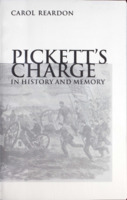 Pickett's charge in history and memory. In this book, Reardon shows that the story told today of Pickett's Charge is really an amalgam of history and memory. The evolution of that mix, she concludes, tells us much about how we come to understand our nation's past.
 -
 Summer for the Gods: the Scopes trial and America's continuing debate over science and religion. Draws from new archival material, as well as historical and legal analysis to examine the many facets of the Scopes trial of 1925 in which the American Civil Liberties Union challenged a controversial Tennessee law banning the teaching of evolution in public schools, and considers the impact of that trial on the continuing debate between religion and science.
 -
 Napoleon Bonaparte. A biography of Napoleon Bonaparte.
 -
 The irony of virtue: ethics and American power. An anthology of articles by Ernest Lefever.
 -
 Mutual contempt: Lyndon Johnson, Robert Kennedy, and the feud that defined a decade. An account of the relationship between Lyndon Johnson and Robert Kennedy.
 -
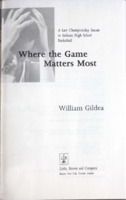 Where the game matters most: a last championship season in Indiana high school basketball. An account of Indiana high school basketball.
 -
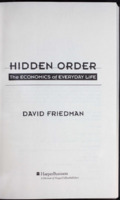 Hidden order: the economics of everyday life. David D. Friedman demonstrates how economics can be used to understand all aspects of human behavior.
 -
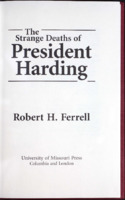 The strange deaths of President Harding. An account of the administration of President Warren G. Harding.
 -
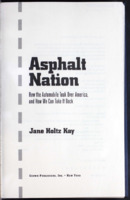 Asphalt nation: how the automobile took over America, and how we can take it back. Details the effects of the automobile upon America.
 -
 Libertarianism: a primer. Details the concept of Libertarianism.
 -
 There's nothing in the middle of the road but yellow stripes and dead armadillos. An account of American politics including such topics as the two-party system, Wall Street, Bill Clinton and others.
 -
 Drawing life : surviving the Unabomber On June 24, 1993, David Gelernter opened a package that exploded, blowing off most of his right hand and damaging his hearing, eyesight, and chest. Ironically, the perpetrator, the technology-phobic "mad genius" we know as the Unabomber, managed to punish one of the very few people who are deeply skeptical about computers and openly critical of technology. Perhaps the greater irony is that the bomb meant to destroy a man's life remade it, and the wounds meant to break his spirit only strengthened it. Now, in this haunting memoir, Gelernter makes a metaphor of himself, seeing in his own near-death and recovery the same disfigurement and promise for American society as a whole. As he ponders his own spiritual condition and the healing power he found in family, religion, community, and art, he critiques the American soul and its devaluing of these very treasures. Instead of teaching and lauding the virtues of courage, critical thinking, and good judgment, Americans have made a media circus out of crime. We are so busy peeking pruriently into the twisted minds of madmen that we have forgotten the acts of violence are not significant because they tickle our bloodlust, but because they force us to rethink our priorities. In a power analysis of the media's response to his experience, for example, Gelernter points out that the Unabomber was described as a "genius," as "sick," as "fascinating," but never as evil. Gelernter asks the chilling question: What does it mean when a culture no longer believes in evil? What happens to a society that has lost its ability to react morally in a crisis? After all, when a man is blown up by a bomb, we should question, not gawk; learn the deeper lessons, not bask in the lurid details. A gripping and poignant narrative as well as a thought-provoking analysis of our culture and where it's headed, Drawing Life is about the resurrection of an extremely thoughtful human being and the extraordinary power of one man's will to live.
 -
 Promised land, crusader state : the American encounter with the world since 1776 Taking up the torch of George Kennan, Pulitzer Prize winner Walter McDougall proposes nothing less than to cleanse the vocabulary of our post-Cold War debate on America's place in world affairs. Looking back over two centuries, he draws a striking contrast between America as a Promised Land, a vision inspired by the "Old Testament" of our diplomatic wisdom through the nineteenth century, and the contrary vision of America as a Crusader State, which inspired the "New Testament" of our foreign policy beginning at the time of the Spanish-American War and reaching its fulfillment in Vietnam. To this day, these two visions and these two testaments battle for control of the way America sees its role in the world.
 -
 American visions : the epic history of art in America The intense relationship between the American people and their surroundings has been the source of a rich artistic tradition. American Visions is a consistently revealing demonstration of the many ways in which artists have expressed this pervasive connection. In nine eloquent chapters, which span the whole range of events, movements, and personalities of more than three centuries, Robert Hughes shows us the myriad associations between the unique society that is America and the art it has produced: O My America, My New Founde Land explores the churches, religious art, and artifacts of the Spanish invaders of the Southwest and the Puritans of New England; the austere esthetic of the Amish, the Quakers, and the Shakers; and the Anglophile culture of Virginia. The Republic of Virtue sets forth the ideals of neo-classicism as interpreted in the paintings of Benjamin West, John Singleton Copley, and the Peale family, and in the public architecture of Thomas Jefferson, Benjamin Latrobe, and Charles Bulfinch. The Wilderness and the West discusses the work of landscape painters such as Thomas Cole, Frederick Church, and the luminists, who viewed the natural world as the fingerprint of God's creation, and of those who recorded America's westward expansion, George Caleb Bingham, Albert Bierstadt, and Frederic Remington, and the accompanying shift in the perception of the Indian, from noble savage to outright demon. American Renaissance describes the opulent era that followed the Civil War, a cultural flowering expressed in the sculpture of Augustus Saint-Gaudens; the paintings of John Singer Sargent, Mary Cassatt, and Childe Hassam; the Newport cottages of the super-rich; and the beaux-arts buildings of Stanford White and his partners. The Gritty Cities looks at the post-Civil War years from another perspective: cast-iron cityscapes, the architecture of Louis Henri Sullivan, and the new realism of Thomas Eakins, Winslow Homer, the trompe-l'oeil painters, and the Ashcan School. Early modernism introduces the first American avant-garde: the painters Arthur Dove, Marsden Hartley, Joseph Stella, Charles Demuth, Charles Sheeler, and Georgia O'Keeffe, and the premier architect of his time, Frank Lloyd Wright. Streamlines and Breadlines surveys the boom years, when skyscrapers and art deco were all the rage, and the bust years that followed, when painters such as Edward Hopper, Stuart Davis, Thomas Hart Benton, Diego Rivera, and Jacob Lawrence showed Americans the way we live now. The Empire of Signs examines the American hegemony after World War II, when the abstract expressionists, Jackson Pollock, Willem de Kooning, Mark Rothko, et al., ruled the artistic roost, until they were dethroned by Jasper Johns, Robert Rauschenberg, the pop artists, and Andy Warhol, while individualists such as David Smith and Joseph Cornell marched to their own music. The Age of Anxiety considers recent events: the return of figurative art and the appearance of minimal and conceptual art; the speculative mania of the 1980s, which led to scandalous auction practices and inflated reputations; and the trends and issues of art in the 1990s. Writing with all the brilliance, authority, and pungent wit that have distinguished his art criticism for Time magazine and his greatly acclaimed study of modern art, The Shock of the New, Robert Hughes now addresses his largest subject: the history of art in America. Lavishly illustrated and packed with biographies, anecdotes, astute and stimulating critical commentary, and sharp social history, American Visions is published in association with a new eight-part PBS television series. Robert Hughes has called it "a love letter to America." This superb volume, which encompasses and enlarges upon the series, is an incomparably entertaining and insightful contemplation of its splendid subject.
 -
 Crazy rhythm : my journey from Brooklyn, jazz, and Wall Street to Nixon's White House, Watergate, and beyond-- Crazy Rhythm is a smart, swinging memoir that answers the question "How did a liberal Jewish jazz musician from Brooklyn become one of President Richard Nixon's most trusted advisers and one of Washington's most influential lawyers?" Leonard Garment was probably the hippest man ever to serve in the White House - a jazz musician with an affinity for artists, African-Americans, Jews, American Indians, and the "rabble-rousers" of post-1960s American politics, a man as.comfortable with Dick Gregory as he was with Dick Nixon. Garment presents a rare view of Nixon, showing us the man as he ascended to the presidency - brilliant, fascinating, and complex. Garment describes his advocacy on behalf of Israel at the United Nations, his efforts to expand government support for the arts, his crisis management of American Indian protests, and his ideological wrestling matches with Pat Buchanan. He also writes poignantly of his tumultuous first.marriage to Grace Albert, a talented television writer who, one day, mysteriously disappeared.
 -
 Nehru : a tryst with destiny Following Nehru from childhood, through his Harrow and Cambridge education, to his years as nationalist leader and Prime Minister of India, Stanley Wolpert's compelling, authoritative biography strips Nehru of his many cloaks and covers, removing the public masks he fashioned for himself throughout his mature life. With a subtle analysis of the various influences on Nehru's intellectual and political life - including the early homosexual influences, his conflict with his father, his close relationship with Mahatma Gandhi, his English education, and the years of periodic and sometimes prolonged imprisonment - Wolpert lays open to the reader the most nuanced, insightful rendering of Nehru's life yet written.Wolpert describes Nehru's brief career as a barrister, and his devotion to India's struggle for freedom, following in the footsteps of Mahatma Gandhi to the dust and poverty of India's villages. The book traces Jawaharlal's swift rise to the presidency of India's National Congress, revealing how his radical ideas and fearless leadership of Congress's left wing soon won him the martyrdom of long years behind British bars for conducting civil disobedience campaigns. After his release in 1945, Nehru met Lord Mountbatten, with whom he was destined to negotiate the independence and partition of British India into the nation states of India and Pakistan in 1947. Nehru then went on to become India's immensely popular Prime Minister for almost two decades.Wolpert brings Nehru's complex personality to life against a vividly portrayed picture of India's fascinating history throughout its most turbulent century. He shows how India's own destiny was intimately wrapped up in the destiny of Nehru, a charismatic leader who stands among the twentieth century's foremost statesmen.
 -
 Radical son : a journey through our times In a narrative that possesses both remarkable political importance and extraordinary literary power, David Horowitz tells the story of his startling political odyssey from Sixties radical to Nineties conservative. A political document of our times, Radical Son traces three generations of one American family's infatuation with the radical left from the Bolshevik Revolution of 1917 to the collapse of the Marxist empire six decades later. David Horowitz was one of the.founders of the New Left and an editor of Ramparts, the magazine that set the intellectual and revolutionary tone for the movement. From his vantage point at the center of the action, he populates Radical Son with vivid portraits of people who made the radical decade, while unmaking America at the same time. We are introduced to an aged Bertrand Russell, the world-famous philosopher and godson of John Stuart Mill, who in his nineties became America's scourge, organizing.a War Crimes Tribunal over the war in Vietnam. There is Tom Hayden, the radical Everyman who promoted guerrilla warfare in America's cities in the Sixties, married film legend Jane Fonda, and became a Democratic state senator when his revolutions failed. We meet Huey Newton, a street hustler and murderer who founded a black militia that became the Sixties' most resonant symbol of black power and black militance. Horowitz's encounter with Newton and his Black Panthers,the most celebrated radical group of the Sixties, becomes the focal point of the story when a brutal murder committed by the Panthers changes his life forever, prompting the profound "second thoughts" that eventually led him to become an intellectual leader of conservatism and its most prominent activist in Hollywood.
 -
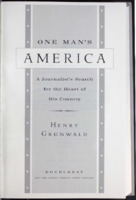 One man's America : a journalist's search for the heart of his country One Man's America is at once a stirring account of a young immigrant becoming an American, a personal history of the major milestones of the late twentieth century, a fascinating insider's view of the most widely read news magazine in the world, and a warm and loving family saga. Here also is the remarkable success story of a boy driven from his native Vienna by the Nazis and returning years later as American ambassador; a copy boy who rose to become editor in chief of.Time Inc. If Time was the voice of America, for many years Henry Grunwald was the voice of Time. He started at the magazine running errands and wound up running all the publications of Time Inc., at the summit of American journalism. Yet this lucid charming autobiography reveals a man not overawed by the momentous events he witnessed and influenced, or by the personalities he encountered. During his long and distinguished career at Time, Grunwald interviewed, befriended,and feuded with some of the most intriguing figures on the world stage, from Whittaker Chambers and Marilyn Monroe to John F. Kennedy and Henry Kissinger to Ronald Reagan and Fidel Castro. But just as intriguing to him were the mores and folkways of all the people of the United States, Main Street bankers and radical students alike, through whom he sought to understand the heart of his adopted country.
 -
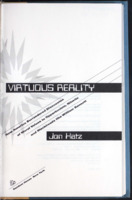 Virtuous reality : how America surrendered discussion of moral values to opportunists, nitwits, and blockheads like William Bennett This book is for nervous parents, neo-Luddites, kids, journalists, rappers, intellectuals, digital wanna-bes, Webheads, MTV users and banners, Beavis & Butt-head fans, survivors of the 1996 presidential election and buyers of William Bennett's moral fables. Here's some of what it's about: Public discussions of culture and new media are hysterical, confusing and irrational. We have to start over. We blame our ascending, technologically distributed culture - music, TV shows, movies, computers - for crime, civic apathy and other social woes, while their complex causes and expensive solutions are ignored. Journalism has lost its moral moorings. Its new corporate owners have taken it far from its original purpose, as practiced by Thomas Paine and Thomas Jefferson, and transformed it into a timid, stuffy, "objective" and increasingly destructive entity. We need to understand the good things the information revolution is bringing and not just wring our hands over the bad. Consider the way interactivity is democratizing the spread of information. How the Internet is transforming science and research. How individuals can now carry on their own dialogues, instead of submitting to the suffocating dictates of three networks and a few newspapers. How citizens have the machinery to join in the discussions of political life. Children need more, not less, access to technology, culture and information. We have been led into a false choice - the old culture versus the new - by shallow politicians and manipulable journalists. Sensible people can pick what they want and need from both cultures, each offering vast amounts of both excellence and garbage.
511–540 of 728