Booknotes Annotations
Item set
Items
-
 Public intellectuals : a study of decline A study of the modern American public intellectual who speaks to the public on issues of political or ideological subjects.
 -
 Blood on the moon : the assassination of Abraham Lincoln Draws upon primary sources to chronicle the assassination of President Abraham Lincoln and debunk myths that have shrouded the event, covering the planning of the murder and the investigation and executions that followed it.
 -
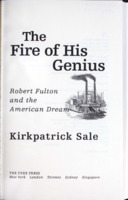 The fire of his genius : Robert Fulton and the American dream None of the well-dressed crowd that gathered on the Hudson River side of Lower Manhattan on the hot afternoon of August 17, 1808, could have known the importance of the object they had come to see and, mostly, deride: Robert Fulton's new steamboat, the North River, the boat that is frequently - and wrongly - remembered as the Clermont. But, as Kirkpatrick Sale shows in this biography of Fulton, the North River's successful four-day round-trip to Albany proved a technology that would transform nineteenth-century America, open up the interior to huge waves of settlers, create and sustain industrial and plantation economies in the nation's heartland, and destroy the remaining Indian civilizations and most of the wild lands on which they depended. The North River's four-day trip introduced the machines and culture that marked the birth of the Industrial Revolution in America. The Fire of His Genius tells the story of the extraordinarily driven and ambitious inventor who brought all this about, probing into the undoubted genius of his mind but, too, laying bare the darker side of the man - and the darker side of the American dream that inspired him.--BOOK JACKET.
 -
 Vernon can read! : a memoir The civil rights leader, attorney, and former head of the National Urban League recounts his boyhood in segregated Atlanta, his career, and the social changes he helped to bring about.
 -
 Edith and Woodrow : the Wilson White House Constructing a thrilling, tightly contained narrative around a trove of previously undisclosed documents, medical diagnoses, White House memoranda, and internal documents, journalist and historian Phyllis Lee Levin sheds new light on the central role of Edith Bolling Galt in Woodrow Wilson's administration. "Shortly after Ellen Wilson's death on the eve of World War I in 1914, President Wilson was swept off his feet by Edith Bolling Galt. They were married in December 1915, and, Levin shows, Edith Wilson set out immediately to consolidate her influence on him and tried to destroy his relationships with Colonel House, his closest friend and adviser, and with Joe Tumulty, his longtime secretary. Wilson resisted these efforts, but Edith was persistent and eventually succeeded."--BOOK JACKET.
 -
 Spin this! : all the ways we don't tell the truth We're all familiar with the warning, "Don't believe everything you see or hear." Bill Press, the popular co-host of CNN's Crossfire, will have you wondering whether you should believe anything at all.
 -
 Roosevelt's secret war : FDR and World War II espionage Despite all that has already been written on Franklin Delano Roosevelt, Joseph Persico has uncovered a hitherto overlooked dimension of FDR's wartime leadership: his involvement in intelligence and espionage operations. "Roosevelt's Secret War also describes how much FDR had been told - before the Holocaust - about the coming fate of Europe's Jews. And Persico also provides a definitive answer to the perennial question: Did FDR know in advance about the attack on Pearl Harbor?"--Jacket.
 -
 Norman Rockwell : a life A biography of the popular artist traces his life and argues that his work is far more interesting and manipulative than critics have credited him for.
 -
 The wizards of Langley : inside the CIA's Directorate of Science and Technology In 1956, the CIA dramatically breached the Iron Curtain when its U-2 began overflying Soviet territory to photograph that nation's military installations. Four years later, the Soviets would shoot down pilot Francis Gary Powers and his U-2, thereby ceasing these missions. Within months, however, the CIA had another, and better, technical program in operation - the CORONA satellite. Throughout the Cold War and beyond, the CIA's scientific wizards would continue to devise high-tech ways to collect and analyze information about potential adversaries. Their mission was of such importance that a new branch of the CIA was created - the Directorate of Science and Technology. "In this first full-length study of the CIA's Directorate of Science and Technology, author Jeffrey T. Richelson introduces us to key personalities who helped shape the directorate: Edwin Land of Polaroid, Albert Wheelon, Carl Duckett, and others who operated secretly within the directorate such as Antonio Mendez, whose "technical service" skills helped six Americans escape Iran after the seizure of the U.S. Embassy in 1979"--Jacket.
 -
 Harry and Ike : the partnership that remade the postwar world Harry S.Truman and Dwight D. Eisenhower worked more closely between 1945 and 1952 than any other two American presidents of the twentieth century. They were partners in changing America's role in the world and in responding to the challenge of a Soviet Europe, yet they are remembered more for the acrimony that ended their friendship. Both were men of character, intelligence, and principle, and as the nation learned in the 1950s, they could also hold a grudge. Drawing on letters, diaries, and interviews with close associates, this is the first examination of the warm friendship, bitter rupture, and eventual reconciliation between two remarkable Americans. From the author of The Eisenhowers: Reluctant Dynasty and Dark Horse comes a volume focusing exclusively on the relationship between Dwight D. Eisenhower and Harry S. Truman.--BOOK JACKET.
 -
 An old wife's tale : my seven decades in love and war Midge Decter's commentary about communists and feminists written in the form of a memoir.
 -
 Crescent and star : Turkey between two worlds For centuries few terrors were more vivid in the West than fear of "the Turk", and many people still think of Turkey as repressive, wild, and dangerous. Crescent and Star is Stephen Kinzer's compelling report on the truth about this nation of contradictions - posed between Europe and Asia, caught between the glories of its Ottoman past and its hopes for a democratic future, between the dominance of its army and the needs of its civilian citizens, between its secular expectations and its Muslim traditions. Will this vibrant country succeed in becoming a great democratic state? This book makes it clear why Turkey is posed to become "the most audacious nation of the twenty-first century."
 -
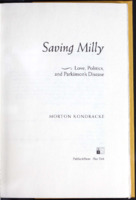 Saving Milly : love, politics, and Parkinson's Disease Kondracke chronicles his marriage, becoming a caregiver and an activist, and the realities of "disease politics".
 -
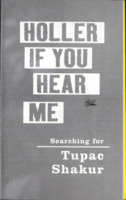 Holler if you hear me : searching for Tupac Shakur Through original interviews and reporting, [the author] offers us a wholly original understanding of the controversial icon who has been called the 'black Elvis'.--Dust jacket.
 -
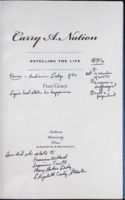 Carry A. Nation : retelling the life Profiles the life of Carry Nation from her upbringing in Kentucky and devastating first marriage to her ascendancy as a full-time smasher, preacher, lecturer, off-Broadway performer, and, from time to time, jailbird.
 -
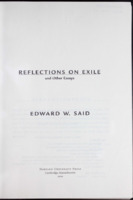 Reflections on exile and other essays Edward Said's volume contains nearly 50 essays on literature, culture, the Middle East, philosophy, history, the arts, and current events.
 -
 The flag, the poet, and the song : the story of the Star-Spangled Banner We all take our national anthem for granted. But it was not always so. In this book, New York Times reporter Irvin Molotsky tells the story behind the story and, in the process, reveals an important and little-known piece of our country's heritage. Molotsky brings both legendary and unknown events and figures to life - from the flag's seamstress to the military heroes of the War of 1812.He charts the events leading up to the war, and the far-reaching impact this obscure conflict has had on our national psyche. The Flag, the Poet, and the Song also uncovers the facts and fallacies surrounding the flag and the song, from the tremendous size of the flag to why we continue trying to sing our anthem to this day.--BOOK JACKET.
 -
 PC, M.D. : how political correctness is corrupting medicine Drawing on a wealth of information, much of it never revealed before, PC, M.D. documents for the first time what happens when the tenets of political correctness - including victimology, multiculturalism and the rejection of fixed truths and individual autonomy - are allowed to enter the fortress of medicine. Consider these examples. A professor at the Harvard School of Public Health teaches her students that racial discrimination causes high blood pressure among blacks - an unsubstantiated and dangerous truth". Former psychiatric patients, calling themselves "consumer-survivors," condemn the health care system for violating their human rights. They are on a crusade to "limit the powers of psychiatry by making consumers full partners in diagnosis and treatment".And nurses charge that they are so oppressed by the male-dominated medical system that they can't give their patients optimal care." "The consequences of putting politics before health are far-reaching, argues Satel. It wastes tax-payer money on bogus research and diverts resources that could be used to discover authentic causes of suffering, provide proven therapies, and rigorously investigate new ones. PC, M.D. is a powerful wake-up call to the medical profession and to patients, who are the ultimate victims of these disturbing trends."--BOOK JACKET.
 -
 Friedrich Hayek : a biography This book tells the story of one of the most important public figures of the twentieth century. It is the first full biography of Friedrich Hayek, the Austrian economist who became the greatest philosopher of liberty in our time.."In this detailed portrait, Alan Ebenstein chronicles the life, works, and legacy of a visionary thinker, from Hayek's early years as the scholarly son of a physician in fin de siecle Vienna to his remarkable career as an economist and political philosopher in London, New York, and Chicago. It was an immensely fruitful life, set against two world wars, the Great Depression, the rise of Nazism, and, during his last years, the historic emergence of free market societies from the collapse of Communism. Throughout it all Hayek struggled - in a brilliant circle of economists, philosophers, political scientists, and other intellectuals - to come to grips with the wrenching transformations of the modern world."--BOOK JACKET.
 -
 Jefferson's pillow : the founding fathers and the dilemma of Black patriotism Wilkins examines the lives of the founding fathers to discover how, "race and slavery still impede our progress."
 -
 A drinking life : a memoir Hamill, a journalist and author from Brooklyn, reflects on how drinking influenced the first half of his life.
 -
 Oh, waiter! One order of crow! : inside the strangest presidential election finish in American history CNN's political and media analyst examines the 2000 campaign and all the unexpected results.
 -
 Staying tuned : a life in journalism The last of the legendary Edward R. Murrow news team still active in journalism tells of adventures in the McCarthy anti-Communist hearings, Watergate coverage, the CBS bureau in Moscow, and revelations of CIA and FBI misdeeds that brought him before the House Ethics Committee and threatened with a jail term if he didn't name his sources. (He didn't, and the threat was never carried out.)--Jacket.
 -
 Charity begins at home : generosity and self-interest among the philanthropic elite Teresa Jean Odendahl analyzes donation patterns of individuals, private foundations and corporations.
 -
 Making patriots The author explores the role of patriotism in American life, tracing the history of patriotic acts and sentiment from the ancient Greeks to the present and probing the role of citizen in an increasingly jaded American society. Samuel Johnson once remarked that patriotism is the last refuge of scoundrels, but is he right? Recent events such as the bombing of federal buildings and the formation of threatening militias in the name of patriotism suggest that he may have been on to something. But the United States has also seen its share of heroes, patriots who, over the course of history, have willingly put their lives at risk for this country and, especially, its principles. And this is even more remarkable given that the United States is a country founded on the principles of equality and democracy that encourage individuality and autonomy far more readily than public spiritedness and self sacrifice. Walter Berns's Making Patriots is a pithy and provocative essay on precisely this paradox. How is patriotism inculcated in a system that, some argue, is founded on self interest? Expertly and intelligibly guiding the reader through the history and philosophy of patriotism in a republic, from the ancient Greeks through contemporary life, Berns considers the unique nature of patriotism in the United States and its precarious state as we enter the twenty first century. And he argues that while both public education and the influence of religion once helped to foster a public minded citizenry, the very idea of patriotism is currently under attack. Berns finds the best answers to his questions in the thought and words of Abraham Lincoln, who understood perhaps better than anyone what the principles of democracy meant and what price adhering to them may exact. The graves at Arlington and Gettysburg and Omaha Beach in Normandy bear witness to the fact that self interested individuals can become patriots, and Making Patriots is a compelling exploration of how this was done and how it might be again.
201–225 of 540