Booknotes Annotations
Item set
Items
-
 One man's America : a journalist's search for the heart of his country One Man's America is at once a stirring account of a young immigrant becoming an American, a personal history of the major milestones of the late twentieth century, a fascinating insider's view of the most widely read news magazine in the world, and a warm and loving family saga. Here also is the remarkable success story of a boy driven from his native Vienna by the Nazis and returning years later as American ambassador; a copy boy who rose to become editor in chief of.Time Inc. If Time was the voice of America, for many years Henry Grunwald was the voice of Time. He started at the magazine running errands and wound up running all the publications of Time Inc., at the summit of American journalism. Yet this lucid charming autobiography reveals a man not overawed by the momentous events he witnessed and influenced, or by the personalities he encountered. During his long and distinguished career at Time, Grunwald interviewed, befriended,and feuded with some of the most intriguing figures on the world stage, from Whittaker Chambers and Marilyn Monroe to John F. Kennedy and Henry Kissinger to Ronald Reagan and Fidel Castro. But just as intriguing to him were the mores and folkways of all the people of the United States, Main Street bankers and radical students alike, through whom he sought to understand the heart of his adopted country.
 -
 Virtuous reality : how America surrendered discussion of moral values to opportunists, nitwits, and blockheads like William Bennett This book is for nervous parents, neo-Luddites, kids, journalists, rappers, intellectuals, digital wanna-bes, Webheads, MTV users and banners, Beavis & Butt-head fans, survivors of the 1996 presidential election and buyers of William Bennett's moral fables. Here's some of what it's about: Public discussions of culture and new media are hysterical, confusing and irrational. We have to start over. We blame our ascending, technologically distributed culture - music, TV shows, movies, computers - for crime, civic apathy and other social woes, while their complex causes and expensive solutions are ignored. Journalism has lost its moral moorings. Its new corporate owners have taken it far from its original purpose, as practiced by Thomas Paine and Thomas Jefferson, and transformed it into a timid, stuffy, "objective" and increasingly destructive entity. We need to understand the good things the information revolution is bringing and not just wring our hands over the bad. Consider the way interactivity is democratizing the spread of information. How the Internet is transforming science and research. How individuals can now carry on their own dialogues, instead of submitting to the suffocating dictates of three networks and a few newspapers. How citizens have the machinery to join in the discussions of political life. Children need more, not less, access to technology, culture and information. We have been led into a false choice - the old culture versus the new - by shallow politicians and manipulable journalists. Sensible people can pick what they want and need from both cultures, each offering vast amounts of both excellence and garbage.
 -
 War by other means : economic espionage in America In this book journalist John Fialka reveals a secret war that jeopardizes the economic security of the United States and the livelihood of millions of Americans. The battlefield is now economic rather than ideological, but espionage in the 1990s springs directly from the ruins of the Cold War spy regimes. Newly configured, the covert operations of America's enemies-and friends-threaten to hollow out the U.S. economy and siphon away the jobs and technologies we need to remain competitive in the twenty-first century. From Russia's brazen shopping tours for U.S. secrets to the subtle art of technology "tunneling" by the Japanese, this book illuminates a loss that is widely felt, but not often seen or understood. Fialka's incisive reporting and trenchant analysis expose an attack on the American economy so deadly as to constitute a time-lapse Pearl Harbor; his book outlines the hard choices we must make if we are to survive
 -
 Speaking truth to power. Anita Hill's characterization of the Clarence Thomas Supreme Court hearings.
 -
 Faubus : the life and times of an American prodigal A biography by Roy Reed about former Governor of Alabama, Orval Faubus.
 -
 American scripture : making the Declaration of Independence Historian Maier shows us the Declaration as both the defining statement of our national identity and the moral standard by which we live as a nation. It is truly "American Scripture," and Maier tells us how it came to be. She describes the transformation of the Second Continental Congress into a national government, unlike anything that preceded or followed it. She lets us hear the voice of the people as revealed in other "declarations" of 1776. Detective-like, she discloses the origins of key ideas and phrases in the Declaration and unravels the complex story of its drafting and of the group-editing job which angered Thomas Jefferson. She also reveals what happened after the signing and celebration: how it was largely forgotten and then revived to buttress political arguments of the nineteenth century; and how Abraham Lincoln ensured its persistence as a living force in American society.--From publisher description.
 -
 Vindicating the founders : race, sex, class, and justice in the origins of America It is commonly, but incorrectly, asserted that because Washington and Jefferson owned slaves, because women, even after the American Revolution, enjoyed virtually no rights, and because the poor and those without property were denied the basic tenets of democratic participation, the Founders were frauds who never really believed that "all men were created equal." West demonstrates why such politically correct interpretations are not only dead wrong, but dangerous. Because our understanding of the Founders so profoundly influences our opinion of contemporary America, this book explains why their views, and particularly the constitutional order they created, are still worthy of our highest respect. West proves that the Founders were indeed sincere in their belief of universal human rights and in their commitment to democracy. By contrasting the Founders' ideas of liberty and equality with today's, West persuasively concludes that contemporary notions bear almost no resemblance to the concepts originally articulated by the Founders.
 -
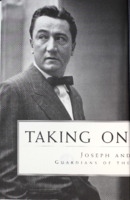 Taking on the world : Joseph and Stewart Alsop--guardians of the American century In 1948 the column-writing Alsop brothers produced an article for the Saturday Evening Post, then the country's preeminent weekly magazine. Its title: "Must America Save the World?" Their answer was a resounding yes. Indeed, Joseph and Stewart Alsop were there in those heady postwar years when the country's foreign-policy elite created what became known as the American Century. As men of words, they served as confidants of and cheerleaders for the men of deeds, who came largely from the country's patrician class. The Alsop brothers were themselves sons of this class. Theodore Roosevelt was the brothers' great-uncle. Eleanor Roosevelt was their mother's first cousin. They grew up with members of this Anglo-Saxon elite, went to school with them, socialized with them. And they threw the considerable weight of their column behind the efforts of these statesmen to refashion the world. Writing four times a week, they appeared in nearly two hundred newspapers; their work also graced the pages of the major magazines of the time. Thus, they wielded immense influence throughout the nation from the victory in World War II to the defeat in Vietnam. Stewart was a political analyst of rare acumen, while Joe, his older brother, was a curmudgeon with an aristocratic bearing and a biting wit. He once likened a dinner at Lyndon Johnson's to "going to an opera in which one man sings all the parts." He was a friend and confidant of John Kennedy, a teacher of Washington ways to Jackie Kennedy. When he called people in the highest echelons of officialdom, they responded. In Taking On the World, Robert W. Merry, a Washington insider himself, has fashioned an intricate and fascinating combination of biography and narrative history. As Mr. Merry puts it, "Within the lifetime of the Alsop brothers the country was remade. And its remaking illuminates their careers, just as their careers illuminate the American Century." Robert Merry casts brilliant light on these two remarkable men, and on one of the most tumultuous periods of the country's history.
 -
 The living and the dead : Robert McNamara and five lives of a lost war This brilliant, explosive, and passionate book reveals the Vietnam War as we never before have seen it - through the prism of Robert McNamara's crucial and tangled decision-making. It is a book that examines not only the genesis - in McNamara's life and character - of his wartime decisions, but how they altered forever the fates of four men and a woman who, beyond their own human importance, might be said to stand in for all who were caught in the maelstrom that was Vietnam. In McNamara's looming shadow we are shown, in equally intense detail, five people who were caught up in the wake of his life-and-death decisions: an artist whose long-harbored rage erupts on a Massachusetts ferry as he tries to kill McNamara, by then retired from the Cabinet; a young Marine physically and psychologically scarred by Vietnam battle; a Quaker who immolated himself in protest outside the Pentagon; a nurse desperate to believe her agonies in Vietnam were for a good cause; and a member of a Saigon family enlisted, and then tragically abandoned, by the Americans. More than a decade in the making, The Living and the Dead is meticulously researched, astonishing in its revelations, and often in conflict with McNamara's own version of events.
 -
 The good book : reading the Bible with mind and heart The Good Book is a brilliant and inspiring look at the Bible today from the preacher to Harvard University, a man Time magazine called one of the seven best preachers in America. "The theme of this book," writes Peter Gomes in his introduction, "is the risk and the joy of the Bible: risk in that we might get it wrong, and joy in the discovery of the living Word becoming flesh. It is around this theme that I formulate three basic questions which the thoughtful reader.brings to the Bible: What is it? How is it used? What does it have to say to me?" With compassion, humor, and insight, Gomes gives us the tools we need to make the Bible a dynamic part of our daily lives - and reminds us that the Bible is not just doctrine and interpretation, but one of the most available and extraordinary means by which we are brought into proximity with the divine.
 -
 Into the storm : a study in command A non-fiction analysis of the Persian Gulf War and the nature of war and command as seen through the actions of General Frederick M. Franks, Jr., commander of the armor and infantry of VII Corps.
 -
 Rage for fame : the ascent of Clare Boothe Luce Born illegitimate on New York's Upper West Side, with nothing to recommend her but blonde good looks and a ferocious intelligence, she used sex, street smarts, acid humor, and money to plot a career more improbable than anything in her own fiction and drama. At ten, Clare Boothe understudied Mary Pickford on Broadway. At twenty, she was both a suffragette and a siren to well-placed men on both sides of the Atlantic. She spurned the handsomest to marry the richest: George Tuttle Brokaw, an alcoholic Fifth Avenue millionaire more than twice her age. At twenty-six, she was free of him, financially secure, in the full flower of her beauty, and ambitious enough to scorch silk. Clare Boothe set about transforming herself into a caption writer at Vogue, staff writer and managing editor of Vanity Fair (glossiest of the Deco-era magazines), and author of Stuffed Shirts, a satiric short-story collection brilliant enough to arouse the envy of Andre Maurois. Then, in three days at age thirty-three, she wrote The Women, the hit play whose dry-martini dialogue ("I'm a virgin - a frozen asset") still elicits gasps from audiences around the world. By then Clare Boothe was married again, this time to a man who was her equal in force of character: Henry Luce, the youthful publisher of Time and Fortune. On their honeymoon, she helped plant the seed of his greatest success, Life. For Luce, meeting Clare was a "coup de foudre," a lightning stroke that transformed him overnight into the most ardent and generous of lovers. To Clare, whom a French artist once described as "a beautiful facade without central heating," Henry was only the latest, and by no means the last, of the men she cruelly disillusioned. Although the marriage endured, this clear-eyed biography chronicles its deterioration from passion to partnerships. Other admirers, including Max Reinhardt, Conde Nast, Joseph P. Kennedy, Randolph Churchill, Noel Coward, Bernard Baruch, Paul Gallico, Isamu Noguchi, and Jawaharlal Nehru, crowd the pages of Rage for Fame - even Gertrude Stein, in one hilarious episode. All testify to Clare Boothe Luce's extraordinary charm and guile. However, she had powerful detractors, notably Franklin D. Roosevelt, David O. Selznick, Frida Kahlo, and Dorothy Parker. Copious quotations from her own diaries, as well as from those of her daughter, Ann, and the letters of her doomed literary mentor Donald Freeman, reveal dark undercurrents of deceit, ruthlessness, and narcissism in her personality. Behind the blue eyes and flirtatious manner, she was, in Irwin Shaw's words, "feminine as a meat axe." By the time she was thirty-seven, Clare Boothe Luce had written two more Broadway hits (the opening of her anti-Nazi play Margin for Error attracted not only Albert Einstein but Thomas Mann), a bestselling book on the 1940 fall of France, and numerous articles for Life, which employed her as a roving correspondent in the early days of World War II. Always fascinated with military strategy and intelligence, she was an ardent advocate of U.S. intervention in both hemispheres. After Pearl Harbor, her rage for fame became a rage for power that only politics would satisfy.
 -
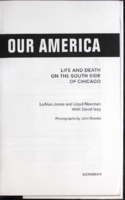 Our America : life and death on the south side of Chicago Every once in a while, voices emerge from a part of the world that we have forgotten or chosen to ignore. Sometimes their words ignite our conscience and rekindle our sense of justice. Our America, the work of two young men living in one of the most notorious public housing projects in America, does just that. LeAlan Jones and Lloyd Newman have made it their mission to be loud voices out of a dark place, through two nationally acclaimed radio documentaries and now through this book. Informed by stunning photographs taken by a talented young photographer from the projects, Our America opens up the world of these two amazing young men, and tells the tragic story of the death of another, Eric Morse, a five year old who was dropped to his death from the fourteenth floor of a building in their project by two other little boys.The book is sometimes funny, often painful, but always full of the promise of Our America - that one day, the talent, the gift, the vision, of our children who are being raised in circumstances that should make us all weep will he heard and praised and understood. Our America is a step toward that goal.
 -
 Underboss : Sammy the Bull Gravano's story of life in the Mafia In March of 1992, the highest-ranking member of the Mafia in America ever to defect broke his oath of silence and testified against his boss, John Gotti. He is Salvatore ("Sammy the Bull") Gravano, second-in-command of the Gambino organized-crime family, the most powerful in the nation. Because of Gotti's uncanny ability to escape conviction in state and federal trials despite charges that he was the Mafia's top chieftain, the media had dubbed him the "Teflon Don." With Sammy the Bull, this would all change.
 -
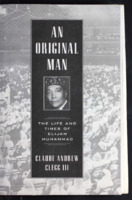 An original man : the life and times of Elijah Muhammad Elijah Muhammad (1897-1975), born Elijah Poole, dreamed of living a better life than his slave ancestors. However, by the time he arrived in Detroit in 1923, the bitter hatred and lynchings of the South had become a part of his consciousness, and the urban poverty and rank discrimination he encountered in the North further ignited his ire and indignation. In An Original Man, historian Claude Clegg reveals the motivations of this charismatic preacher whose life has been ignored for decades by scholars and biographers. With access to previously classified F.B.I. documents and the opportunity to interview two of Elijah Muhammad's surviving sons and members of the Poole clan in Georgia, Clegg demonstrates that Elijah Muhammad was indeed one of the most influential African-Americans of this century. In this illuminating biography, Clegg not only recounts Elijah Muhammad's early years in Detroit as one of the original members of the Nation of Islam, but also tells of Muhammad's decision to bring the movement first to Chicago and then to the East Coast, his decision to resist the draft during World War II (for which he spent time in prison), the growth of the movement after the war, and the historical schism that erupted between Muhammad and Malcolm X, a break that ultimately defined two major directions of black political consciousness. Particularly valuable is Clegg's outstanding and original examination of the philosophical roots of the Nation of Islam, which are heavily influenced by the writings of Marcus Garvey, Noble Drew Ali, the Jehovah's Witnesses, and the Freemasons.
 -
 Personal history The author describes her privileged but lonely childhood, her tragic marriage to the charismatic Phil Graham, her struggles as the head of the Washington Post, and the colorful politicians and celebrities she has known.
 -
 Wry martinis Buckley's frequent New Yorker contributions to the back-page "Shouts and Murmurs" column have been a regular source of hilarity: The Pope's appearance on Oprah to promote his book; letters of recommendation for O. J. Simpson's New York condo application; a review of Peter Benchley's new book, Gills, about a vengeful Dolly Varden trout; the starship Enterprise's most daring and difficult assignment - programming its VCR; and several dozen other delightful New Yorker parodies, satires, and pastiches are all collected here. Buckley has occasionally been the source of controversy, as when he perpetrated a highly efficient and successful hoax claiming that the Kremlin was about to auction off the embalmed remains of Lenin in order to raise hard currency. A review he wrote of one of Tom Clancy's novels so infuriated the novelist that he launched fax cruise missiles at Buckley - providing Buckley with ammunition for his counterstrike. When not annoying the Russian Interior Ministry or megaselling thriller writers, Buckley embarks on unusual adventures of his own: steaming up the Amazon in the company of billionaires and deposed European royalty, spelunking in Mayan caves, landing on the deck of the U.S.S. Nimitz, and hurtling about the wild blue yonder with the Thunderbirds (see "How I Went Nine Gs in an F-16 and Only Threw Up Five Times").
 -
 Out of America : a black man confronts Africa Nothing in Keith Richburg's long and respected journalistic career at the Washington Post prepared him for what he would encounter as the paper's correspondent in Africa. At first all he could focus on was an Africa he tried his best to explain, a continent where brutal murder had become routine, where dictators and warlords silenced dissent with machine guns and machetes, where local officials sought payoffs for the most routine tasks, and where starvation had become depressingly common. But slowly, and with a great deal of personal anguish, this reporter asked a much more difficult question: If this is Africa, what does it mean for me to be an African American?In this provocative and unvarnished account of his three years on the continent of his ancestors, Richburg takes us on an extraordinary journey that sweeps from Somalia to Rwanda to Zaire and finally to South Africa, and shows how he was forced to confront the divide within himself between his African racial heritage and his American cultural identity.Are these really my people? he wonders. Am I truly an African American? The answer, Richburg finds after much soul-searching, is that black skin is not enough to bind him to Africa and that he is an American first, foremost, and singularly. To those who would romanticize Mother Africa as a black Valhalla, where blacks can walk with dignity and pride, he regrets to report that this is not the reality. He has been there and has witnessed the killings, the repression, the false promises, the horror. And in his darkest night of the soul, Richburg looks into his own family's past and concludes, "Thank God. Thank God my nameless ancestor, brought across the ocean in chains and leg irons, made it out alive. Thank God I am an American."
 -
 The coming conflict with China In eye-opening detail, Richard Bernstein and Ross H. Munro, both of whom have been correspondents in China and bureau chiefs in Asia, examine China's continuing portrayal of America as the enemy; the shifts in Beijing's perception of American might; the enormous boon to China that the takeover of Hong Kong represents; China's increase in military strength; its challenging positions on Taiwan and the South China Sea; its sale of weapons to U.S. adversaries; its concerted efforts to hijack technology; its rigorous attempts - often through American corporations profiting in China - to influence U.S. policy. We discover how our military strategists are revising their scenarios for future conflicts, and how China is conducting its espionage. We are brought face-to-face with the startling implications of the trade imbalance between the United States and China (our deficit is $40 billion and growing). We learn of the struggles within the Chinese leadership and how assertive Chinese nationalism augurs a turbulent period ahead. This book is an informed and illuminating examination of a high-stakes clash of competing ideologies and economic interests.
 -
 Whittaker Chambers : a biography Nearly half a century after giving the testimony that sent Alger Hiss to prison, Whittaker Chambers remains among the most controversial of twentieth-century Americans, hated by many, revered by others. Whittaker Chambers is the first biography of this complex and enigmatic figure. Drawing on dozens of interviews and on materials from forty archives in the United States and abroad - including still-classified KGB dossiers - Sam Tanenhaus traces the remarkable journey that led Chambers from a sleepy Long Island village to center stage in America's greatest political trial and then, in his last years, to a unique role as the godfather of post-war conservatism. Whittaker Chambers is rich in startling new information about every phase of its subject's varied life: his days as New York's "hottest literary Bolshevik"; his years as a Communist agent and then defector, hunted by the KGB; his conversion to Quakerism; his secret sexual turmoil; his turbulent decade at Time, where he rose from the obscurity of the book-review page to transform the magazine into an oracle of apocalyptic anti-Communism. But all this was merely a prelude to the memorable events that began in August 1948, when Chambers was summoned by a congressional committee to testify about his past as a Communist agent. Reluctantly, he divulged his key part in a spy ring that had penetrated the most sensitive areas of the U.S. government, including the State Department, where one of his accomplices, Alger Hiss, had risen to a senior position. Chamber's allegations, and Hiss's prompt, emphatic denial, held the nation spellbound - and initiated a drama that changed the face of America. Drawing on an array of new sources, including transcripts of secret HUAC testimony, Whittaker Chambers goes far beyond all previous accounts of the Hiss case, re-creating its improbable twists and turns, and disentangling the motives that propelled a vivid cast of characters in unpredictable directions.
 -
 Bright college years : inside the American campus today Tracking and mapping the academic year, Matthews casts a searchlight in turn on those who learn, those who teach, and those who arrange, especially the makers and managers of money and image whose methods shape higher education more strongly every year. In the process, she goes behind the scenes at every type of school: enormous state universities like Texas or Arizona, where finding French class requires a map and a bus ticket; sleek country-club schools like Vanderbilt or USC, where student allowances can exceed faculty salaries; fiercely specialized colleges like Cal Tech, where students dream in computer languages; struggling trailer-house campuses like South Dakota's Sinte Gleska, the nation's first Native American university.Throughout, Matthews keeps in unsparing focus the conflicts between our competing images of what college is supposed to be: show business, rite of passage, profit machine, private planet, gateway to knowledge and power. Irreverent, engrossing, vastly entertaining, and intensely observed, Bright College Years is one veteran journalist's (and native daughter's) inside scoop on a beloved American institution in the grip of enormous change.On one level, the world of higher education is still, as Matthews puts it, "a chunk of the twentieth century dropped live and squabbling on the threshold of the twenty-first." But behind the stately trees and lovely towers a powerful hidden life has taken root, as academe is buffeted by the same economic and demographic forces that are drastically reshaping the rest of society. What's going on in there? And while we're at it, what exactly, these days, is college for?
 -
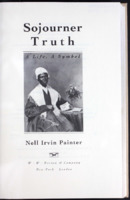 Sojourner Truth : a life, a symbol Sojourner Truth: ex-slave and fiery abolitionist, figure of imposing physique, riveting preacher and spellbinding singer who dazzled listeners with her wit and originality. Straight talking and unsentimental, Truth became a national symbol for strong black women - indeed, for all strong women. Like Harriet Tubman and Frederick Douglass, she is regarded as a radical of immense and enduring influence; yet unlike them, what is remembered of her consists more of myth than of.historical fact. Now, in a masterful blend of scholarship and sympathetic understanding, eminent historian Nell Irvin Painter goes beyond the myths, words, and photographs to uncover the life of a complex woman who was born into slavery and died a legend. Inspired by religion, Truth transformed herself from a domestic servant named Isabella into an itinerant Pentecostal preacher; her words of empowerment have inspired black women and poor people the world over to this.day. As an abolitionist and a feminist, Truth defied the stereotype of "the slave" as male and "the woman" as white - expounding a fact that still bears repeating: among blacks there are women; among women, there are blacks.
 -
 Waking the tempests : ordinary life in the new Russia After communism in the Soviet Union came chaos. Ordinary Russians, liberated from a controlled and communal society, woke up in 1992 to a life that seemed to have no rules. For some, the new disorder offered possibilities--to get rich, to enjoy the excesses of life without a brutal government intervening. For others, it has been a time to worship or create freely, or to leave the country altogether. For many, however, freedom is like being abandoned without a guidebook. Randolph takes us to hospitals and sex clinics, to old communal apartments and new suburbs, to decrepit schools and new private academies. She interviews ballerinas and priests, murderers and ordinary people fighting a tidal wave of crime. She talks with young men and old women, doctors and conjurers, real estate brokers and newly converted businessmen--all trying to cope in a world where the rules changed virtually overnight.--From publisher description.
 -
 Einstein : a life His name is synonymous with genius. His work helped shape the twentieth century and point the way toward the next. In the more than forty years since his death, Albert Einstein has continued to intrigue and inspire new generations. Now, in the first full-scale biography of Einstein to be published in some twenty years, acclaimed author Denis Brian probes the private, public, and scientific personas of the enigmatic man behind the legend. "For two decades, Denis Brian pored over the Einstein archives and conducted extensive interviews with the scientist's friends and associates. In the process, he discovered a wealth of absorbing new information, much of it previously withheld by those closest to Einstein - including Helen Dukas, his personal secretary, and Otto Nathan, the executor of Einstein's estate. What emerges in Brian's brilliantly drawn life of Einstein is a down-to-earth and always compelling figure." "Exploring this staggering legacy in conversation with many of Einstein's contemporaries, Denis Brian penetrates the veil of formulas, theories, and experiments to expand our understanding of their meaning. With incisive, intimate detail, he recreates the world in which Einstein worked, in solitude and with others, revered by his assistants and enjoying warm relationships with other physicists." "Also included in Brian's comprehensive portrait are the FBI's investigation of Einstein's alleged communist connections, as well as his efforts on behalf of Europe's Jews during Hitler's rise to power, and his ardent support of the formation of the state of Israel."--Jacket.
 -
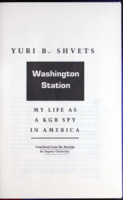 Washington station : my life as a KGB spy in America In Washington Station, his riveting account of his experiences spying against the United States, Yuri Shvets describes in fascinating detail what only a real KGB officer could know: the daily activities of Soviet spies in our nation's capital, including the elaborate games of cat and mouse between KGB officers and FBI agents.
351–375 of 540