Booknotes Annotations
Item set
Items
-
 An even better place : America in the 21st century An Even Better Place is more than just a collection of good, common-sense ideas about what's right and what's wrong. It's a powerful, provocative statement, Gephardt's first ever, about what our priorities must be if we are to be able to get our politics and our policy back on track. Drawing from examples in his own life - his childhood in St.Louis, his career in Congress, and the lives and ideas of the many Americans he has encountered - Gephardt offers a roadmap that illuminates where we've come from, and where we need to go. Refreshingly candid, An Even Better Place is a book for everyone frustrated with the state of politics in America and everyone who believes that we can and must be better.
 -
 Deadlines and datelines This collection of essays includes materials from Rather's weekly newspaper column, his daily [CBS] radio program, and articles written for magazines and newspapers ... Short essays, most written in 1997 and 1998, are grouped in sections on news from across America, foreign policy, national politics, personalities, and lighter topics. Libr J.
 -
 The way of the bootstrapper : nine action steps for achieving your dreams Reverend Floyd Flake explains nine steps that can help people achieve their dreams by relying on their own personal resources.
 -
 We band of angels : the untold story of American nurses trapped on Bataan by the Japanese Chronicles the experiences of ninety-nine Army and Navy nurses who were captured when the Japanese Imperial Navy attacked the American bases located in the Philippines.
 -
 Morgan : American financier A century ago, J. Pierpont Morgan bestrode the financial world like a colossus. The organizing force behind General Electric, U.S. Steel, and vast railroad empires, he served for decades as America's unofficial central banker: a few months after he died in 1913, the Federal Reserve replaced the private system he had devised. An early supporter of Thomas Edison and Andrew Carnegie, the confidant (and rival) of Theodore Roosevelt, England's Edward VII, and Germany's Kaiser Wilhelm, and the companion of several fascinating women, Morgan shaped his world and ours in countless ways. Yet since his death he has remained a mysterious figure, celebrated as a hero of industrial progress and vilified as a rapacious robber baron. In this account, drawn from more than a decade's work in newly available archives, biographer Jean Strouse animates Morgan's life and times to reveal the entirely human character behind the often terrifying visage.Morgan brings eye-opening perspectives to the role the banker played in the emerging U.S. economy as he raised capital in Europe, reorganized bankrupt railroads, stabilized markets in times of crisis, and set up many of the corporate and financial structures we take for granted. And surprising new stories introduce us in vivid detail to Morgan's childhood in Hartford and Boston, his schooling in Switzerland and Germany, the start of his career in New York - as well as to his relations with his esteemed and exacting father, with his adored first and difficult second wives, with his children, partners, business associates, female consorts, and friends.Morgan had a second major career as a collector of art, stocking America with visual and literary treasures of the past. Strouse's biography gives dramatic new dimension not only to Morgan but to the culture, political struggles, and social conflicts of America's momentous Gilded Age.
 -
 Robert Frost : a life A biography of Robert Frost, the poet who won four Pulitzer prizes before dying in 1963. The book describes his early life--he wanted to be a baseball player--his farming in New England, its influence on his poetry, and his many bouts with depression and self-doubt.
 -
 Ex-friends : falling out with Allen Ginsberg, Lionel & Diana Trilling, Lillian Hellman, Hannah Arendt, and Norman Mailer Norman Podhoretz's account of the breakup of a group of New York intellectuals of the 50s and 60s.
 -
 American heritage great minds of history Five historians ; Stephan Ambrose, David McCullough, James McPherson, Richard White, Gordon Wood, discuss various aspects of American history.
 -
 The times of my life and my life with the Times In this memoir, The New York Times's Max Frankel tells his life story the way he lived it - in tandem with the big news stories of our time. "Max Frankel started to write for The New York Times as a student at Columbia in 1949, and during the next half century he held just about every important position on the paper - foreign correspondent, Washington bureau chief, editorials editor, and executive editor." "When The Times of My Life begins, Max Frankel is a boy in Nazi Germany; we experience the terror of his wartime escape with his heroic mother, their immigrant lives in New York, and a teacher's inspired decision that he could belatedly learn to read English if he learned to write it. And so Max Frankel found his career. His book, like his life, moves through Hitler's Berlin, Khrushchev's Moscow, Castro's Havana, and the Washington of Kennedy, Johnson, and Nixon. It reevaluates the Cold War and interweaves Frankel's personal and professional lives with the era's greatest stories, from Sputnik to the Pentagon Papers, from the building of the Berlin Wall to its collapse, all the while tracking the tensions of managing the world's greatest newspaper."--BOOK JACKET.
 -
 Confucius lives next door : what living in the East teaches us about living in the West The author "uses his family's experience overseas--including mishaps and misapprehensions--to look at Asia's 'social miracle' and its origin in the ethical values outlines by the Chinese sage Confucius 2,500 years ago."--Jacket.
 -
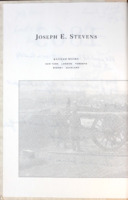 1863 : the rebirth of a nation Drawing from personal letters, official documents, and rare photographs, the author offers a look at the "tumultuous" 1863 and all the personalities of the year.
 -
 The future and its enemies : the growing conflict over creativity, enterprise, and progress Looking ahead into the next century, the author predicts a conflict between advocates of bureaucracy and the status quo and advocates of competition and choice.
 -
 Walking on water: Black American lives at the turn of the twenty-first century. Randall Kenan's depictions of African American life.
 -
 Embracing defeat : Japan in the wake of World War II Discusses how the defeat and American military occupation of Japan after World War II affected each level of Japanese society.
 -
 Presidential ambition : how the presidents gained power, kept power, and got things done Combining a potent narrative with persuasive and compelling insights, Shenkman reveals that it is not just recent presidents who have been ambitious - and at times frighteningly overambitious, willing to sacrifice their health, family, loyalty, and values as they sought to overcome the obstacles to power - but that they all have. This volcanic ambition, Shenkman shows, has been essential not only in obtaining power but in facing - and attempting to master - the great historical forces that have continually reshaped the United States, from Manifest Destiny and Emancipation to immigration, the Great Depression, and nuclear weapons.As Shenkman describes the lives and careers of the most representative and colorful presidents from Washington to Nixon, he shows that those who succeeded in reaching the White House, whatever their flaws, were complicated human beings, idealistic as well as ambitious. Over time, however, they began to make increasingly troubling compromises, leading to a decline in the moral tone of American politics.What drove politics downward? In a stunning conclusion, Shenkman demonstrates that it wasn't a decline in presidential character that was responsible, but change - the dramatic transformation of the United States from a country of four million in Washington's day to more than a quarter billion today - that made running the country more complicated and difficult. Instead of things getting better and better they got worse and worse as people became used to increasingly promiscuous political practices.
 -
 To keep the waters troubled : the life of Ida B. Wells In the generation that followed Frederick Douglass, no African American was more prominent, or more outspoken, than Ida B. Wells. Her crusade against lynching in the 1890s made her famous, or notorious, across America, and she was seriously considered as a rival to W.E.B. Du Bois and Booker T. Washington for race leadership. This book is the first full biography of Wells, a passionate crusader for black people and women - and one who was sometimes torn by her conflicting loyalties to race and gender.
 -
 The greedy hand : how taxes drive Americans crazy and what to do about it A look into the taxes we pay, what they are for and how to change the laws effectively for our benefit.
 -
 The haunted wood : Soviet espionage in America--the Stalin era Based upon Previously Secret KGB records, The Haunted Wood reveals for the first time the riveting story of Soviet espionage's golden age" in the United States throughout the 1930s, World War II, and the early Cold War. Historian Allen Weinstein, author of Perjury: The Hiss-Chambers Case, and Alexander Vassiliev, a former KGB agent-turned-journalist, were provided unique access to thousands of classified Soviet intelligence dispatches that documented the KGB's success in acquiring America's most valuable atomic, military, and diplomatic secrets. The Haunted Wood narrates the triumphs and failures of Soviet operatives and their American agents during the 1930s and 1940s, describing as well the compelling human dramas involved." "Several chapters provide major new accounts from Moscow's own record of its relations with Alger Hiss and atomic spies Klaus Fuchs, Harry Gold, David Greenglass, Theodore Hall, and Julius Rosenberg, among others, along with fresh information on Soviet espionage in the United States by British agents for the Kremlin - Guy Burgess, Donald Maclean, and Harold "Kim" Philby."--BOOK JACKET.
 -
 The wreck of the Henrietta Marie : an African-American's spiritual journey to uncover a sunken slave ship's past The author offers an account of the slave ship Henrietta Marie and its role in his ancestors' history.
 -
 Genuine reality : a life of William James This first full biography of William James in nearly a generation brings us the man alive in all his complexity. Intellectual rebel, romantic pragmatist, aristocratic pluralist, James was both a towering figure of the nineteenth century and a springboard into the twentieth. Constitutionally opposed to the rigidity and stability of the nineteenth century, James guided his generation toward the ambivalence, unpredictability, and indeterminacy of the times that followed. His explorations of pluralism and pragmatism nurtured ideas that continue to shape our society. Profiting from a rich range of sources, among them 1,500 letters written between James and his wife, Alice, Linda Simon creates an intimate portrait of this multifaceted and contradictory man.
 -
 To end a war Richard Holbrooke's account of the negotiations to end the Balkan War.
 -
 The greatest generation In this book, Tom Brokaw goes out into America, to tell through the stories of individual men and women the story of a generation, America's citizen heroes and heroines who came of age during the Great Depression and the Second World War and went on to build modern America. This generation was united not only by a common purpose, but also by common values - duty, honor, economy, courage, service, love of family and country, and, above all, responsibility for oneself. In this book, you will meet people whose everyday lives reveal how a generation persevered through war, and were trained by it, and then went on to create interesting and useful lives and the America we have today.
 -
 Reporting Vietnam. Volume 1 includes interviews and reportage by Neil Sheehan, David Halberstam, Russell Baker, Meg Greenfield, Martha Gellhorn, Ward Just, Tom Wolfe, Mary McCarthy, Seymour Hersh, Francine du Plessix and others.Volume 2 includes reportage by Seymour Hersh, Francine du Plessix Gray, John Saar, Gloria Emerson, Sydney Schanberg, Flora Lewis, Peter Arnett, and others.
 -
 John Quincy Adams : a public life, a private life. Biography of John Quincy Adams. Adams' career included being president, senator, representative, secretary of state, and ambassador.
 -
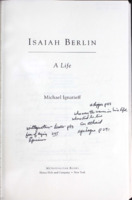 Isaiah Berlin : a life. Isaiah Berlin was witness to a century. Born in the twilight of the Czarist empire, he lived long enough to see the Soviet state collapse. The son of a Riga timber merchant and the first Jew elected to a fellowship at All Souls, Oxford, he was a presiding judge of intellectual life on both sides of the Atlantic for sixty years: historian of the Russian intelligentsia, biographer of Marx, scholar of the Romantic movement, and defender of the liberal idea of freedom against Soviet tyranny. When he died in 1997, he was hailed as the most important liberal philosopher of his time. "But Berlin's life was not only a life of the mind. Present at the crucial events of our age, he was in Washington during World War II, in Moscow at the dawn of the Cold War, in Israel as the new state came into being." "For this definitive biography - the result of a remarkable ten-year collaboration between biographer and subject - Michael Ignatieff, himself a leading public intellectual, interviewed Berlin extensively and was granted complete access to his papers, one of the largest archives in Anglo-American cultural history. Ignatieff charts the emergence of a unique liberal temperament - serene, comic, secular, and unafraid - and he examines its influence on Berlin's vision of liberalism, which stressed the often tragic nature of political and moral choice."--BOOK JACKET.
301–325 of 540